

Business
Startup Marketing for Fundraising: What Investors Notice Before the First Meeting
Editor’s Note: This one is for anyone about to raise. Genesis Digital comes up near the end, and it works with any business, member or not. You know…
An invitation-only circle of founders, investors, and leaders united by commerce, conscience, and legacy.
Recommend a Member
Direct access to exclusive investment rounds in pioneering companies, pre-screened, founder-led, and presented before they reach the broader market. Genesis has reviewed about 200 companies in 3 years and approved 5.
See upcoming events →

As Genesis expands across the US, we are introducing local chapters for members in each region. Miami and New York/New Jersey are active. Look forward to more local events, or help us establish your own chapter.
See upcoming events →

Genesis is not a conference you attend once and forget. It is a living social network of private dinners, immersive gatherings, chapter events, and experiences designed for people who have earned their place in the room.
Get your deals →

Direct access to Israel's most innovative companies in technology, cybersecurity, AI, and defense, presented exclusively to Genesis BH members before reaching the broader market.
Become a member →

Direct exposure to curated Israeli tech, cyber, and innovation deal flow: opportunities unavailable through conventional channels.
Become a member →

White-glove service on demand. VIP dining reservations, private transportation, exclusive hotels and curated stays, personal travel planning, and bespoke experiences.
Get your deals →

Helping businesses and companies get their digital materials and presence out there. Our Digital division, with a powerful team, creates high-end videos, presentations, websites and all the other materials you need to look your best.
Click to learn more →

Direct partnerships with premier health, recovery, and rejuvenation providers give members access to world-class wellness services unavailable through standard channels.
Get your deals →

Private dinners, closed-room briefings, leadership summits, and curated experiences across the U.S. and Israel.
Get your deals →
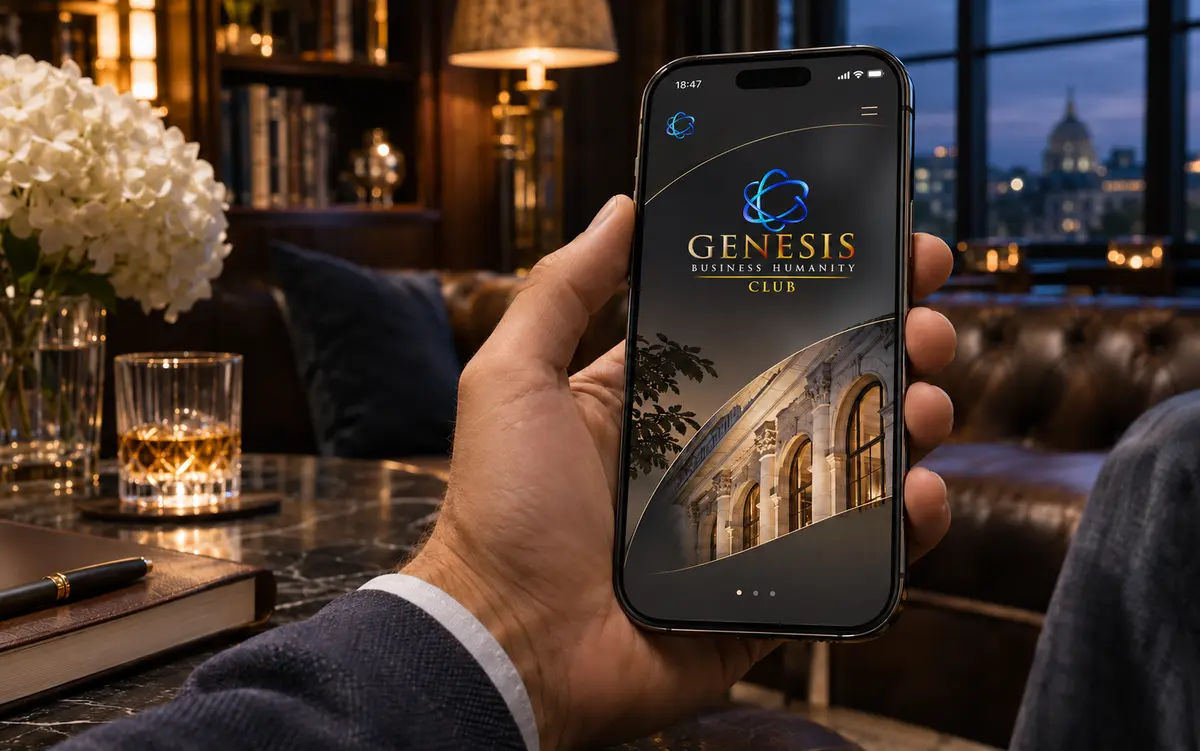
The Genesis app gives members full access to the club ecosystem from anywhere in the world. Browse the member directory, RSVP to private events, track portfolio companies, and stay connected to every chapter.
Inside Genesis, capital meets cause. Members co-invest in Israeli and American companies that are solving real problems, advancing technology, and creating social change, alongside people they trust, in rooms that are closed to the public.

Business
Editor’s Note: This one is for anyone about to raise. Genesis Digital comes up near the end, and it works with any business, member or not. You know…

Business
Editor’s Note: This one is for anyone about to raise. Genesis Digital comes up near the end, and it works with any business, member or not.
You know the product works. The last few investor meetings ended nicely enough, with a “let’s stay in touch” and nothing after it. Nobody told you why, so you tweak the deck, cut a slide and try again.
It is worth looking earlier than the deck. An investor starts forming a view of your company from the very first thing they read about it: the line that says what you do, how your website presents the business, and whether the story holds together everywhere it shows up. By the time you are in the meeting, part of the picture has already been drawn.
The pitch-deck platform DocSend has data that points the same way, reported in TechCrunch. In decks that raised money, investors spent an average of 22 seconds on the company purpose slide, about a fifth of their total viewing time. It comes from DocSend’s own platform and dates from 2019, so treat it as a signal, not a rule. But it fits the advice founders hear again and again: lead with why the company exists, and the rest gets an easier hearing.
So what does an investor need in the first minute? Three things: the problem, who pays to solve it, and why your team is the one to do it. Try this test. Explain the company to a smart friend outside your industry and ask them to say it back in one sentence. If they can’t, an investor won’t be able to repeat it to a partner either. Write that sentence first, then put it everywhere: the website homepage, the opening slide, the intro email and your LinkedIn profile.
Be specific about what changes for the customer. “AI-powered platform” tells an investor very little, because plenty of companies say it. What a customer can do after using the product, and what that is worth, gives them something to remember and something to ask about. Say who the customer is, how big the problem is and what the result looks like in numbers, wherever you have them.
Make your traction easy to find, too. Investors want proof that the idea works outside the founder’s head, so put the numbers where they can’t be missed: customers signed, revenue or recurring revenue, milestones reached and the dates of the next ones. Keep them current and date each one so readers know how fresh it is. If you are early and the numbers are small, say so honestly and show the direction. Investors can work with small and honest. They struggle with large and vague. A stale figure on a homepage makes people wonder about every other figure.
Then there is consistency. Expect investors to look you up in more than one place: your website, your deck, your social profiles and any video. If those tell different stories, or look as if they came from different companies, a question forms that you never get to answer, which is how carefully this team runs everything else. One message, one look and one set of current numbers tells them you pay attention.
Video helps for the same reason. A short, well-made film lets you show the product working and explain the problem in your own voice, and an investor can forward it to a colleague in seconds. Put the one-page summary, the film, the homepage and the deck side by side and they should read like chapters of one argument. When an investor moves from one to the next and the case gets stronger, confidence builds without you saying a word. It is all about making your case easy to follow for someone who is reading a lot of decks.
That joined-up thinking is why Genesis Digital exists. It is the marketing and video division of Genesis Business Humanity, and it offers AI-powered digital marketing, brand strategy and video production. It is led by CEO Omer BarSadeh, an IMDb-credited filmmaker and media executive whose campaigns include work for Porsche, Amazon and YouTube. Its services are designed to work together, so your website, deck and video all say the same thing.
It also ties into what happens at Star of Genesis, where founders present live to Genesis members and the opening minutes shape the questions that follow. Genesis Digital helps a company get its story clear and consistent before it walks into those rooms, or any other investor’s. If you are getting ready to raise and want the story settled first, write to the Genesis team at info@genesisbh.net or visit www.genesisbh.net.
Genesis is an invitation-only investment and social club with chapters in Miami, New York/New Jersey, and Los Angeles.

Investment
Editor’s Note: No companies are named below. The questions come from real Star of Genesis sessions, and they travel well from one deal to the next. Picture the…

Investment
Editor’s Note: No companies are named below. The questions come from real Star of Genesis sessions, and they travel well from one deal to the next.
Picture the deck. It is polished, the founder talks well, the market slide has a number with a lot of zeros on it, and the round closes in three weeks. Somewhere at the back of your mind, a small voice asks the question every private investor eventually learns to listen to: what am I not being shown?
Most people don’t have a good way to answer it. Diligence on your own usually means a few phone calls, a skim through the data room and a gut feeling, all squeezed into a deadline set by the person who wants your money. The founder has told this story many times. You are hearing it for the first time, which is why having a structure helps.
Here is something worth knowing before you start. CB Insights looked at 431 venture-backed companies that shut down since 2023 and found that 70% ran out of capital. That sounds like the answer, until you read what the report says next: running out of capital is “almost always the final cause of death, not the root problem.” The money ran out because something went wrong earlier. The product wasn’t needed, or the sales channel never worked, or the team couldn’t deliver. Good diligence goes looking for that earlier thing while it can still change your mind.
Start with the customers. Is anyone actually paying, and do they keep paying? Revenue, signed contracts and real shipping dates count as evidence. Interest, unfunded pilots and “conversations with several large players” do not. At Genesis, every company goes through the same four checks: traction, technology, market potential and fundraising strategy.
Then look at the people and the raise together. Find out what the team has actually delivered before, and call someone who has worked with the founder, ideally someone the founder didn’t suggest. Look at how much is being raised, what it is meant to achieve and how far it will go. A founder who can tell you exactly what the next milestone costs usually understands the business. One who can’t is telling you something too.
Do read the paperwork. The cap table tells you who already owns what, how much the founders have kept and whether earlier investors hold terms that could cut across yours. A founder who has given away too much too early is a risk no growth chart will fix. Ask for the latest numbers in writing and see how long they take to arrive.
When you finally sit down with the founder, ask what is hard to rehearse. Who pays, how much, and how often? What happens if the biggest customer leaves? Which approval or regulation stands between this product and revenue, and how long does each step take? What exactly does this round buy? Then watch what happens when you ask something they didn’t prepare for, because that is closer to how the company behaves when things get difficult.
Some of the best questions come from people who have worked in the founder’s industry. In Star of Genesis sessions, members have asked about regulatory categories, what a treatment costs and whether it can scale, and how a product actually reaches its customers. A deck can’t settle any of that, and an investor working alone might never think to ask.
Pay attention to how bad news lands, too. A founder who says plainly that a number came in lower than hoped, or that a milestone slipped, and explains what changed, gives you more to work with than one with a polished answer for everything. Every answer should be something you can check.
That is where a club like Genesis earns its place, because diligence there is shared. A company presents at Star of Genesis and walks members through its traction, technology, business model and commercial potential. Members question the founder live, talk through expansion, fundraising and regulatory issues, and offer advice and introductions. Every session ends with clear next steps, whether that means sending materials, arranging a site visit or making an introduction. Company details sit on the Dealum platform so members can review them at their own pace, and anyone who wants to go deeper is invited into a due diligence meeting.
You get to watch how a company handles other people’s questions, hear from members who know the sector, and decide with a lot more than a pitch in front of you. Membership comes mostly through referral, so if you would like to see companies this way, write to the Genesis team at info@genesisbh.net or visit www.genesisbh.net.
This article is for general information only and does not constitute investment, tax or legal advice.
Genesis is an invitation-only investment and social club with chapters in Miami, New York/New Jersey, and Los Angeles.
Member Highlight
Editor’s Note: Another in the series on the people behind Genesis, this one from the clinical side. It is built from Dr. Fedder's professional record and public reporting.…
Member Highlight
Editor’s Note: Another in the series on the people behind Genesis, this one from the clinical side. It is built from Dr. Fedder's professional record and public reporting.
Every medical device company eventually runs into a question it can't answer from the inside: would a surgeon actually use this? The answer decides whether a product earns a place in the operating room, and it almost never comes from the company that built it.
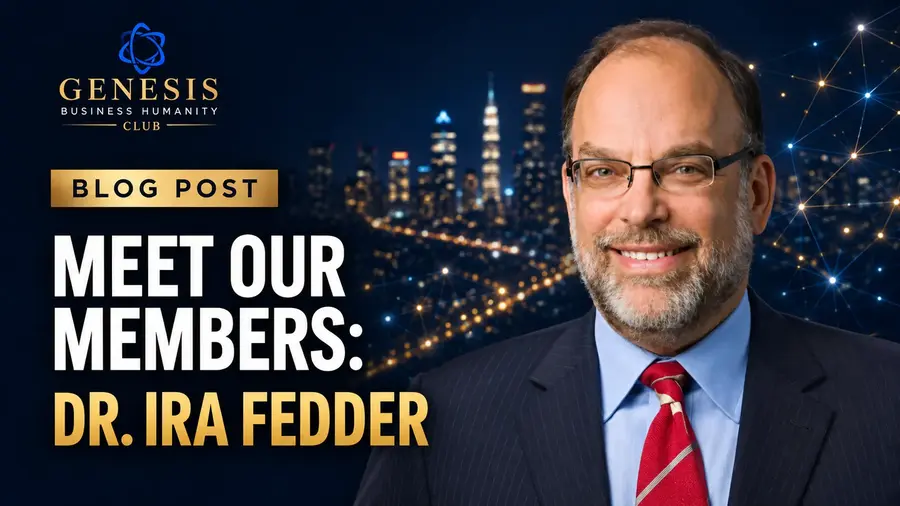
Dr. Ira Fedder spends his working life on the other side of that question. He is a fellowship-trained orthopaedic spine surgeon with more than 35 years of clinical experience, a Genesis member and part of the medical advisory board behind Genesis MedTech.
His practice covers operative and non-operative care of spine and neck conditions, so he sees the full range of options a patient has, which is exactly the context any new device has to compete in. That breadth matters in a device conversation, because a surgeon's day is made of trade-offs, and a product is judged against them. Public reporting has described his clinical focus as including cervical disc herniation, myelopathy, cervical stenosis, lumbar stenosis and sciatica. He is affiliated with University of Maryland St. Joseph Medical Center in Towson, Maryland, and has been named a Top Doctor in Spine Surgery by Baltimore magazine.
He has also advised a device company directly. Becker's Spine Review reported in 2013 that Tyber Medical, a New Jersey medical device company, added him as a surgeon advisor. For a founder, that kind of experience is practical, and here is why.
A clinical advisor can answer what engineers and investors can't. Where in the procedure does this device sit? What does it replace, and what would make a surgeon change a technique they have used for years? What evidence would a colleague need to see before trying it? Those are the questions a hospital committee will ask, and a founder who has already heard them from a practicing surgeon can answer them calmly.
That matters because hospitals don't buy on regulatory clearance alone. A value analysis committee of clinical and administrative staff reviews each new product. Clinicians assess how it would be used, and administrators weigh the cost against clinical, patient and process outcomes. So clinical credibility sits right in the middle of the purchasing decision, and a founder whose product has never faced a practising surgeon's questions meets them for the first time in front of the committee.
Reimbursement raises the stakes. A hospital can only use what it can be paid for, and if no suitable billing code exists, the application for a new CPT code can take up to 24 months. How clinicians describe a procedure, and where a device fits inside it, shapes how that case gets built.
The same goes for investors reading a medical deal. It is easy to tell a clinical story and much harder to test one. Claims about clinical benefit sound equally confident in every pitch, and the people best placed to test them are the ones who treat patients. A board of working clinicians gives a medical company a way to check its clinical story before capital or customers depend on it.
That is the job of the advisory board at Genesis MedTech, a co-ordinated market entry programme for medical device, health-tech and software companies that takes them from first market assessment to first signed contract. Alongside the partners, six practising physicians and clinical leaders help shape how each product is positioned for clinical adoption, reimbursement alignment and health system credibility. Dr. Fedder's spine expertise is one part of a board that spans pain medicine, internal medicine and nephrology, dentistry and orthopedic spine surgery.
The partners bring the commercial side: group purchasing organisation relationships, health system contracting and enterprise sales experience. The advisory board brings the clinical side, which is the half a founder is least likely to have in house. You need both, because a product can satisfy a purchasing contract and still fail to win a surgeon's confidence, or win the surgeon and stall at purchasing.
For a founder, that means physicians with decades in practice can look at how your product is positioned before it meets a hospital committee. For an investor, it is a reason to trust that the clinical case behind a medical company has been looked at by people who treat patients. If you are building a medical device, health-tech or software company and want that perspective on your US plans, write to the Genesis team at amiel@genesisbh.net or ranny@genesisbh.net, or visit www.genesisbh.net. A short note about the product and the stage it has reached is enough to start.